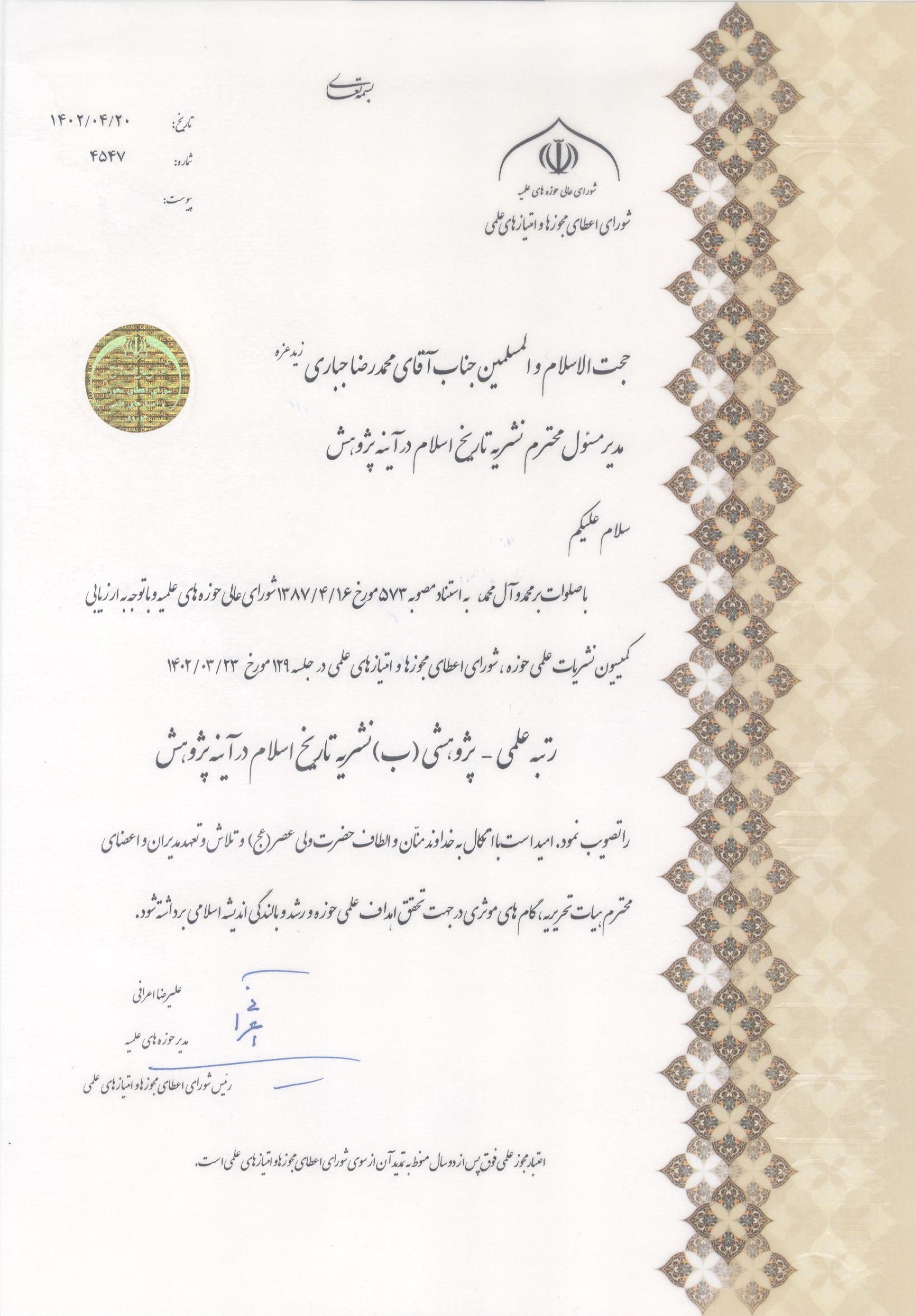
Volume 14, Issue 1, No 42, Year 2017, Pages 5-21
A Historical Analysis of the Overthrow of Sadat Kiaee Government by the Safavids (with Emphasis on Theoretical Foundations)
Article Type:
Research
Writers:
Hasan Allah Yari / Assistant Professor, Department of History, University of Khalij-e- Fars / hasanallahyari@gmail.com
Abstract:
The Sadat Kiaee, who succeeded to form a local and firmly-rooted state in Gilan about a century and a half before the advent of the Safavids, provided Isma'il Mirza, the next Shah Isma'il and, thus, played an important role in preventing the definite overthrow of the Safavids and restoring them to power in order to fulfill their political goal in the early years of the 10th century. Yet, Kiaee government was destined to be overthrown by the Safavids and ousted in the early 11th century. Using a historical- analytical method, this research tries to examine the course of this phenomenon, i.e. the suppression of Sadat Kiaee. The research results indicate that, despite the numerous indications, the Safavids could never control the Sadat Kiaee completely. With their background based on mystical path and Siyadat and their desire to form a state an based on an ideal Shah (kingdom), according to their local tradition, Kiaee rulers targeted the theoretical foundation of the Safavids and were thus brutally suppressed.
چکیده و کلیدواژه فارسی (Persian)
Title :تحلیل تاریخی حذف حکومت سادات کیایی توسط صفویان (با تأکید بر مبانی نظری)
Abstract:
خاندان سادات کیایی، که قریب یک قرن و نیم قبل از برآمدن صفویان موفق به تشکیل حکومتی محلی و ریشه دار در گیلان شده بودند، با پناه دادن به اسماعیل میرزا، شاه اسماعیل بعدی، نقش مهمی در ممانعت از نابودی قطعی صفویان و احیای آنها برای نیل به هدف سیاسی خود در آغازین سال های قرن دهم هـ..ق داشتند. با وجود این، سرنوشت حکومت کیایی، حذف و انقراض در ابتدای قرن یازدهم ق توسط صفویان بود. این پژوهش تلاش می کند تا فرایند و مبانی این پدیده، یعنی سرکوب سادات کیایی را به روش تحلیل تاریخی بررسی نماید.
نتایج این تحقیق نشان می دهد که با وجود نشانه های متعدد، صفویان در تعامل با سادات کیایی هرگز موفق نشدند آنها را به طور کامل کنترل کنند. امرای کیایی با سابقه ای مبتنی بر سیادت ـ طریقت و داعیهی حکومت بر مبنای شاه آرمانی، در مقیاس محلی خویش، بنیان نظری صفویان را هدف قرار داده بودند، بدین روی، به سخت ترین شکل ممکن سرکوب شدند.
Keywords:
References:
- افوشتهاي نطنزي، محمودبن هدايتالله، نقاوه الآثار في ذكر الاخيار در تاريخ صفويه، به اهتمام احسان اشراقي، تهران، علمي و فرهنگي، 1373.
- اوحدي دقاقي بلياني، تقيالدين محمد، تذکره عرفاتالعاشقين و عرصاتالعارفين، تصحيح سيدمحسن ناجي نصرآبادي،تهران، اساطير، 1388.
- پناهي، عباس و انوش مرادي، «تحليل دلايل روابط شاه تهماسب و شاه عباس اول با حکومتهاي محلي گيلان»، پژوهشنامه تاريخهاي محلي ايران، 1394، سال چهارم، ش 7، ص 27-37.
- تاجبخش، احمد، تاريخ صفويه، شيراز، نويد، 1372.
- تتوي، قاضي احمد (آصف خان قزويني)، تاريخ الفي، تصحيح غلامرضا طباطباييمجد، تهران، علمي و فرهنگي، 1382.
- جنابدي، ميرزابيگ حسنبن حسيني، روضةالصفويه، تصحيح غلامرضا طباطباييمجد ، تهران، نشر بنياد موقوفات محمود افشار، 1378.
- حزين لاهيجي، شيخ محمدعلي، تاريخ حزين، اصفهان، کتابفروشي تأييد، 1332.
- حسيني استرآبادي، حسنبن مرتضي، از شيخصفي تا شاهصفي از تاريخ سلطاني، به اهتمام احسان اشراقي، تهران، علمي، 1364.
- خواندمير (غياثالدين همامالدين الحسيني)، حبيب السير، تصحيح محمد دبيرسياقي، تهران، کتابفروشي خيام، 1362.
- رابينيو، ه. ل، ولايت دارالمرز گيلان، ترجمة جعفر خماميزاده، رشت، طاعتي، 1366.
- رازي، اميناحمد، تذکره هفت اقليم، تصحيح جواد فاضل و علياکبر علمي، بيجا، ادبيه، بيتا.
- روملو، حسنبيگ، احسن التواريخ، تصحيح عبدالحسين نوايي، تهران، بابک، 1357.
- سيوري، راجر، ايران عصر صفوي، ترجمة کامبيز عزيزي، تهران، مرکز، 1385.
- سيوري، راجر، در باب صفويان، ترجمة رمضانعلي روحاللهي، تهران، مرکز، 1380.
- شاملو، ولي قليبن داودقلي، قصص الخاقاني، تصحيح سيدحسن سادات ناصري، تهران، وزارت فرهنگ و ارشاد اسلامي، 1371.
- شريعتي فوکلايي، حسن، حکومت شيعي آلکيا در گيلان، قم، مؤسسة شيعهشناسي، 1388.
- شوشتري، قاضي نورالله، مجالسالمؤمنين، تهران، کتابفروشي اسلاميه، 1354.
- شيرازي، عبديبيگ، تکلمةالاخبار، تصحيح عبدالحسين نوايي، تهران، شرفي، 1369.
- صادقي کتابدار، مجمعالخواص(متن ترکي به همراه ترجمه به فارسي)، ترجمة عبدالرسول خيامپور، تبريز، چاپخانه اختر شمال، 1327.
- صفتگل، منصور، فراز و فرود صفويان، تهران، کانون انديشه جوان، 1388.
- صفوي، سامميرزا، تذکره تحفه سامي، تصحيح رکنالدين همايونفر، تهران، علمي، بيتا.
- غفاري قزويني، قاضي احمد، تاريخ جهان آرا، تصحيح مجتبي مينوي، تهران، کتابفروشي حافظ، 1343.
- فخرالزماني قزويني، ملاعبدالنبي، تذکره ميخانه، تصحيح احمد گلچين معاني، تهران، اقبال، 1363.
- فلسفي، نصرالله، زندگاني شاه عباس اول، تهران، دانشگاه تهران، 1344.
- فومني، عبدالفتاح، تاريخ گيلان، تصحيح برنهارد دارن، پطرزبورغ، آکادمي امپراتوري، 1374.
- قبادالحسيني، خور شاه، تاريخ ايلچي نظام شاه، تصحيح محمدرضا نصيري و هانهدا کوئيچي، تهران، انجمن آثار و مفاخر فرهنگي، 1379.
- قزويني، يحييبن عبداللطيف، لب التواريخ، تهران، بنياد گويا، 1363.
- کرماني، عبدالرزاق، تذکره در مناقب حضرت شاه نعمتالله ولي کرماني، تهران، طهوري، 1361.
- لاهيجي، عليبن شمسالدينبن حاجي حسين، تاريخ خاني، تصحيح منوچهر ستوده، تهران، بنياد فرهنگ ايران، 1352.
- منجم يزدي، ملاجلالالدين، تاريخ عباسي يا روزنامه ملاجلال، به کوشش سيفالله وحيدنيا، تهران، وحيد، 1366.
- منشي قزويني، بوداق، جواهرالاخبار، تصحيح محسن بهرامنژاد، تهران، ميراث مكتوب، 1378.
- منشي قمي، قاضي احمدبن شرفالدين، خلاصةالتواريخ، تصحيح احسان اشراقي، تهران، دانشگاه تهران، 1359.
- منشي، اسکندربيگ، تاريخ عالم آراي عباسي، تصحيح محمداسماعيل رضواني، تهران، دنياي کتاب، 1377.
- نصرآبادي، ميرزا محمدطاهر، تذکره نصرآبادي، تهران، کتابفروشي فروغي، بيتا.
- نوايي، عبدالحسين (به کوشش)، شاه عباس اول صفوي: مجموعه اسناد و مکاتبات تاريخي همراه با يادداشتهاي تفصيلي، تهران، زرين، 1367.
- نوايي، عبدالحسين، 1368، شاه تهماسب اول صفوي: مجموعه اسناد و مکاتبات تاريخي همراه با يادداشتهاي تفصيلي، تهران، ارغوان، 1368.
- نوزاد، فريدون (به کوشش)، نامههاي خان احمدخان گيلاني، تهران، بنياد موقوفات دکتر محمود افشار، 1373.
- واله اصفهاني، محمديوسف، خلد برين، تصحيح ميرهاشم محدث، تهران، بنياد موقوفات دکترمحمود افشار، 1372.
- هدايت، رضاقليخان، جهانگشاي خاقان، تصحيح الله دتا مظطر، اسلامآباد، مركز تحقيقات فارسي ايران و پاكستان، 1364.
- ـــــ ، تاريخ روضةالصفاي ناصري، تصحيح جمشيد کيانفر، تهران، اساطير، 1380.
- ـــــ ، عالم آراي شاه تهماسب اول، تصحيح يدالله شکري، تهران، بنياد فرهنگ ايران، 1350.
- الهياري، حسن، «تحليل تاريخي مهاجرت سادات از ايران به هند در عصر صفوي با تأکيد بر تنشهاي دروني و بيروني سادات»، مطالعات تاريخ فرهنگي، 1395، سال هفتم، ش 28، ص 1-22
Copyright © 2017 The Author(s). This article is published under the Creative Commons Attribution-NonCommercial 4.0 International License.
Cite this article:
RIS
Mendeley
BibTeX
APA
MLA
HARVARD
VANCOUVER
Allah Yari , Hasan. (2017) A Historical Analysis of the Overthrow of Sadat Kiaee Government by the Safavids (with Emphasis on Theoretical Foundations). , 14(1), 5-21
Hasan Allah Yari ."A Historical Analysis of the Overthrow of Sadat Kiaee Government by the Safavids (with Emphasis on Theoretical Foundations)". , 14, 1, 2017, 5-21
Allah Yari , H.(2017) 'A Historical Analysis of the Overthrow of Sadat Kiaee Government by the Safavids (with Emphasis on Theoretical Foundations)', , 14(1), pp. 5-21