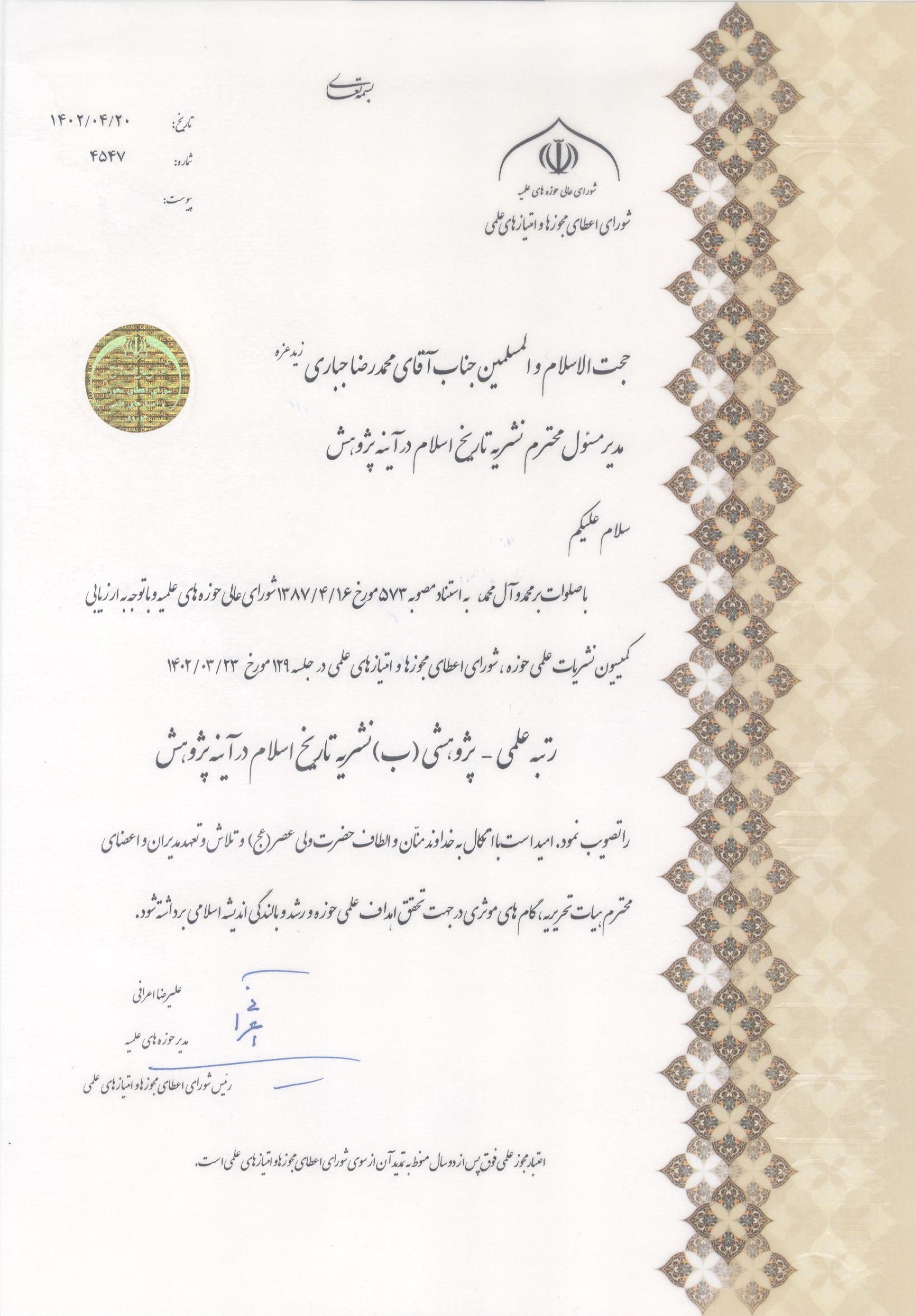
این مقاله در یکی از شماره های بعدی نشریه تاریخ اسلام در آینه پژوهش منتشر خواهد شد.
واکاوی سبک تاریخ¬نگاری اهل بیت(ع) در زیارات مأثوره؛ بررسی موردی زیارت ناحیه مقدسه
نوع مقاله:
پژوهشی
نویسندگان:

چکیده:
گزارش و نگارش تاریخ اسلام فقط در متون مورخین کهن و مکاتب تاریخ نگاری رایج قابل رهگیری نیست. ائمه اطهار(ع) نیز به عنوان پیشوایان دین سبک تاریخ نگاری خاص خود را داشتند که در زیارات قابل رهگیری است. پرسش مشخص در پژوهش حاضر آن است که سبک تاریخ نگاری اهل بیت(ع) در زیارات ماثوره؛ با بررسی موردی زیارت ناحیه مقدسه چگونه بوده است؟ بر اساس یافتههای پژوهش، سبک تاریخ نگاری در متن زیارت ناحیه مقدسه به روش تحلیلی، در دو بخش قابل استخراج است. بخش اول مولفههای محتوایی بوده است که شامل توجه دهی به پیشینه تاریخی جریان حق، توجه دهی به آینده رویدادهای تاریخی، اهتمام به بیان جایگاه زنان موثر در جریانهای تاریخی، تبیین نسبت اماکن تاریخی با شخصیتهای تاریخی، عدم نام آوری از عناصر منفی در عین گزارش عملکرد، انعکاس رویدادهای فرامادّی مرتبط با حوادث تاریخی، ترکیب بیان تاریخ و بیان وظیفه،تصویرسازی دقیق صحنه¬های حساس تاریخی، داوری عملکردهای مثبت و منفی، پیامدسنجی رویدادهای تاریخی، پایاندهی گزارش به دعای مرتبط با رویداد، گزارش معدود نقشهای حیوانی خاص بوده؛ همچنین بخش دوم مولفههای شکلی، شامل ترکیب تخاطب فراعصری با گزارش تاریخی، ارائه گزارش تاریخی در قالب نثر منظوم، عنوان گذاری حیوانی نقشهای غیر انسانی میباشد.
کلمات کلیدی:
Article data in English (انگلیسی)
Title:
An Analysis of the Historiographical Style of the Ahl al-Bayt in the Pilgrimages of the Holy Land; A Case Study of the Pilgrimage of the Holy Land
Abstract:
The reporting and writing of Islamic history cannot be traced only in the texts of ancient historians and popular historiographic schools. The pure Imams, as leaders of the religion, also had their own style of historiography, which can be traced in the pilgrimages. The specific question in the present study is what was the style of historiography of the Ahl al-Bayt in the pilgrimages of the Holy Land, with a case study of the pilgrimage to the Holy Land?
Based on the research findings, the historiographical style in the text of the pilgrimage to the holy area can be extracted analytically in two parts. The first part is the content components, which include paying attention to the historical background of the Haq movement, paying attention to the future of historical events, striving to express the position of influential women in historical movements, explaining the relationship between historical places and historical figures, and not mentioning negative elements while reporting on performance. Reflection of metaphysical events related to historical events, combination of historical and task statements, accurate depiction of sensitive historical scenes, judgment of positive and negative actions, evaluation of the consequences of historical events, ending the report with a prayer related to the event, reporting on a few specific animal roles. Also, the second part of the formal components includes the combination of postmodern discourse with historical reporting, presenting historical reporting in the form of verse prose, and animalistic titling of non-human characters.
شیوه ارجاع به این مقاله:
RIS
Mendeley
BibTeX
APA
MLA
HARVARD
VANCOUVER
جانعلی زاده چناری، علیرضا، اسعدی، محمدمصطفی. (1405) واکاوی سبک تاریخ¬نگاری اهل بیت(ع) در زیارات مأثوره؛ بررسی موردی زیارت ناحیه مقدسه. دو فصلنامه تاریخ اسلام در آینه پژوهش، ()، -
علیرضا جانعلی زاده چناری؛ محمدمصطفی اسعدی."واکاوی سبک تاریخ¬نگاری اهل بیت(ع) در زیارات مأثوره؛ بررسی موردی زیارت ناحیه مقدسه". دو فصلنامه تاریخ اسلام در آینه پژوهش، ، ، 1405، -
جانعلی زاده چناری، علیرضا، اسعدی، محمدمصطفی.(1405) 'واکاوی سبک تاریخ¬نگاری اهل بیت(ع) در زیارات مأثوره؛ بررسی موردی زیارت ناحیه مقدسه'، دو فصلنامه تاریخ اسلام در آینه پژوهش، (), pp. -